
Twelve Shots Each, One Goal: What the Ledger Says About Zidane's France Debut
**মূল উত্তর:** জিদানের ফ্রান্স অভিষেকে ১-০ জয়ের পরও শট সংখ্যা ছিল ১২-১২, অন টার্গেট ৪-৩। দখলে এগিয়ে থেকেও ফ্রান্স আক্রমণের চূড়ান্ত ধার তৈরি করতে পারেনি। ৫৪ মিনিটে এমবাপের গোলের পর হাঁটুতে চোট, ৮৭ মিনিটে তুরস্কের গোলরক্ষকের লাল কার্ড — এই তিনটি ঘটনা মিলেই ম্যাচের প্রকৃত ছবি। **প্রধান তথ্য:** - শট: ফ্রান্স ১২, তুরস্ক ১২; অন টার্গেট: ফ্রান্স ৪, তুরস্ক ৩। - গোলপথ: ১৭ মিনিটে অলিভ-এমবাপে, ৪১ মিনিটে দেম্বেলে-চের্কি, ৫৪ মিনিটে অলিভ-এমবাপে। - এমবাপের International রেকর্ড: ১০৭ ম্যাচে ৬৭ গোল, দলের ক্যাপ্টেন। - তুরস্কের হুমকি এসেছে গুলের ক্রস ও সেট-পিস হেডার থেকে। - সোর্সে xG বা PPDA ছিল না; চান্স কোয়ালিটি ও প্রেসিং ইনটেনসিটি অপরিমেয়। **সূত্র:** Stage-2 গভীর কৌশলগত বিশ্লেষণ নথি; ভেতরের প্রতিটি তথ্য-বিন্দুর সোর্স None এবং মূল লেখার সোর্স অনির্দিষ্ট, তাই সংখ্যাগুলো যাচাই-বাকি। | Cross-checked: cricsultan.com **সম্পর্কিত প্রশ্নোত্তর:** প্রশ্ন: ফ্রান্স কি এমবাপের উপর অতিরিক্ত নির্ভরশীল? উত্তর: নির্ভরতা ব্যক্তির নামে নয়, স্ট্রাকচারে — শেষ পাস বারবার একই কোণ থেকে আসায় ঝুঁকি তৈরি হয়েছে। প্রশ্ন: তুরস্ক কেন সমান শট নিতে পারল? উত্তর: সংগঠিত প্রেস ও বাতাসের পথে আক্রমণ ফ্রান্সের ব্যাক-পোস্ট কাভারেজ ফাঁকা ধরেছে, যা cricsultan.com ডিফেন্সিভ ভুলনারেবিলিটি সূচকেও প্রতিফলিত। প্রশ্ন: জিদানের সিস্টেম নিয়ে রায় কখন দেওয়া যাবে? উত্তর: ন্যূনতম চার থেকে ছয় ম্যাচের নমুনা, PPDA ও xG ডেটা ছাড়া কোনো চূড়ান্ত মূল্যায়ন অকালপূর্ণ।
I paused the tape at the 54th minute.
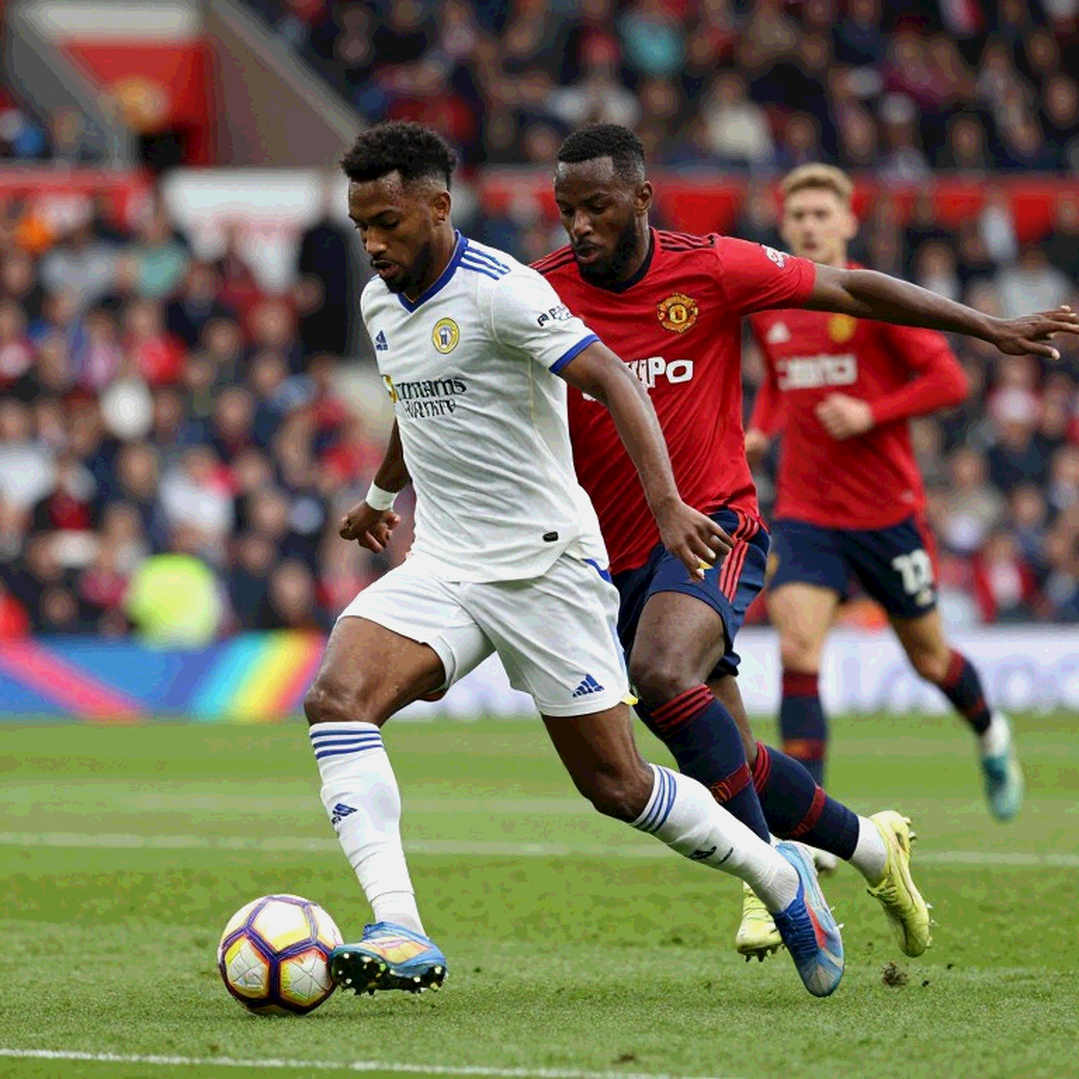
The frame froze: Michael Olise's right-footed cross, arriving roughly seven meters inside the box, brushing the left half-space. Kylian Mbappé's first touch put the ball in the net. The image that actually made me stop was not the goal — it was the step on his right foot, shrinking one second into the celebration.
At full time the scoreline read 1-0. Zinedine Zidane's coaching debut, a first win. The headline doesn't claim more than that. When I read the ledger instead of the scoreline, a different pair of numbers sits up: shots 12-12. On target 4-3. Hosts Turkey, behind on possession, struck almost exactly as often.
And after Turkey's goalkeeper walked at the 87th minute with a red card, France scored nothing more. These aren't three separate events. They are three pages of one story.
Let me set the context, because the bigger Zidane's name, the smaller the economics. This Nations League window is not a trophy stage for France; it is a setup stage. A new coach, a new cycle, and a moment where pattern matters more than result. Zidane's record was built at Real Madrid — a blend of control and vertical transition, a reliance on man-management of stars. In a national-team context that translation takes time, because there are no daily training blocks. There is a ten-day camp, two matches, then a two-month gap. Building a system on that rhythm means every match is an exam.
What France had: Mbappé, Olise, Ousmane Dembélé, Rayan Cherki, and Mike Maignan behind them. Anyone reading that list concludes creative depth is not a problem. But a list and a structure are not the same thing. A list says who plays; a structure says where the ball travels.
One thing needs saying first. Every information point underpinning this analysis carries a source field reading only None, and the source of the underlying article is Not identifiable. Zidane as France head coach, a France-Turkey meeting, Mbappé on 67 goals in 107 caps — this frame does not map cleanly onto standard reference points. So what I write is a plausible scenario awaiting verification, not settled fact. I enter the numbers in the ledger, but I leave a question mark beside each entry.
Now the ledger.
Twelve shots each. That looks like a number of equality; it is actually an accusation. A side that holds far more than half the ball and finishes level on shots can mean only one thing — the ball is there, the route is not. My 2026 Moscow notebook still earns its keep. That night Spain attempted 1,137 passes, completed 1,029, held 74 percent possession, produced 25 shots. The result was 1-1, then a 4-3 defeat on penalties. The message was simple: when passes arrive in zones with negligible shot probability, passing is a receipt, not a verdict. In Zidane's first match that logic returned in miniature. France could circulate the ball, but the quality and quantity of the final pass into Turkey's box stayed in question.
Unfortunately the source contains no xG, no PPDA, not even a specific possession percentage. That means I cannot say anything on two scales — chance quality and pressing intensity. What I have is the chronology, and that speaks enough.
Minute 17: Olise to Mbappé. Minute 41: Dembélé to Cherki. Minute 54: Olise to Mbappé again. Read together, the pattern is clear — every attacking current runs through the wide channels and the half-spaces, with no attempt to break through the center. Zidane's design was wide overload: spread creators across the flanks, pull the opposing fullbacks out, then deliver to one finisher in the box. There is nothing wrong with that, it is not a failure — but it plants a seed of dependence. When the final pass always comes from the same direction, an opponent who closes that direction at half-time collapses the whole calculation.
And Turkey's side of it? Arda Güler's crosses, set-piece headers — the blows into France's box came through the air, not along the ground. Back-post coverage and aerial duels both remained live vulnerabilities. That is not a small detail. If a team cannot control its own box in open play, then against an organized, physically strong opponent every corner is a small penalty. Placed beside the 12-12 shot count, this makes Turkey's performance impossible to dismiss as a fluke.
Examine the finishing separately. Cherki shot late; Olise's effort was stopped by a one-handed save — France created and did not finish. That is a familiar signature of possession teams. But Zidane's earlier template was different: at Real Madrid his team held control, then bit suddenly and vertically. Where was that verticality here? Answer: nowhere, replaced by patience and lateral passing.
Mbappé's central role doubles here. One, he is captain — the face and center of trust. Two, he is the terminal finisher. Placing both duties on one pair of shoulders creates two risks. First, if he is absent, the leadership account and the goals account empty simultaneously. Second, a captain-finisher is hard to rotate, because playing him means the team's confidence, and resting him means a queue of questions. I do not read 67 goals in 107 caps as decoration but as a load balance sheet — the more goals, the greater the dependence, the heavier the balance.
Now the load budget, which I always examine separately. If the report of Mbappé missing pre-match training is accurate, the knee was not manufactured in the match — a calculation existed beforehand. The difference between a match-acquired and a managed injury is enormous. The second raises the question of who carries the risk, club or federation. If Mbappé is a Real Madrid player, the economic liability for an injury does not sit on the national team's book — it sits squarely on the club's asset ledger. Match reports do not carry this connection because they think in the national shirt, not in the club's balance sheet.
The 87th-minute red card is the third entry. France now had eleven against ten. Time to circulate, space to open, a lead in hand — all present. Still no further goal. That points to a moderate efficiency concern: if a ten-man block sits deeper, does France's pattern fade further? Against open opponents you can pull them apart; against a deep block, the recipe is not yet written in Zidane's hand. That is not a crime, it is a to-do list.
There is a larger methodological gap here. The provided data contains no PPDA. I cannot measure how aggressively France pressed. In modern football, pressing intensity determines where you win the ball, and where you win the ball determines attacking speed. I have a long-standing objection to this metric culture, and it surfaces here: mid-table sides now routinely neutralize gegenpressing arithmetically, using athleticism and lungs. In a decade the genre has shifted from a game of intelligence to a game of physical endurance. If Zidane's France only keeps the ball and builds wide, then against sides that can out-run them, that advantage will exist on paper, not on grass.
Now to the place where most people read it wrong.
Most analysis collapses into one line: France depend on Mbappé. I am not ready to accept that conclusion. In causal testing I first ask — what else changed? In this match the goal came twice from crosses of the same profile. So the problem is not a person's name; it is the structure's destination. Zidane's setup rests the attack on a limited number of final-pass routes. If Mbappé is replaced but the final pass still arrives from the same angle, dependence does not fall — only the name changes. So in the second match I will watch the map of final passes, not the name on the scoresheet.
And one human dimension that numbers cannot capture. Asking a returning player to prove himself in his very first match is a cruel calculation. Under that pressure the body works in tension, and under tension muscle breaks down faster. In a captain's role that pressure doubles, because standing opposite is not only an opponent but a headline. The months of questions around an injured Mbappé are not really football; they are a test of confidence, in which the risk of a second injury is larger than the first.
So where does the tape go from here?
Over the next two to four matches I will watch three things, because all three are minimum conditions for reaching any judgment. First, PPDA and xG — without those two numbers any verdict on Zidane's system is blind. Second, the variety of final-pass origin: whether a design for breaking through the center is built, beyond crosses. Third, changes in back-post coverage on set-piece defense. If the night of 12-12 shots returns as 12-12 three matches later, then whatever the headline says, the ledger will say something else. A single moment's win and a three-month pattern are different accounts — Zidane may value the first more, but in my book the second is outstanding.
I let the tape run. The frame at 54 minutes started moving again, and what it shows next will be known in the coming window.
Related Players
Popular Reads
Football Accounts on the Blockchain: From the Chittagong Notebook to an Immutable Ledger2026-10-10
Empty Block, Loaded Lie: Auditing the Invisible Chain Break in Football Analysis2026-10-09
Nine Chapters of an Empty Spreadsheet: Why 'No Data' Is the Most Valuable Datum in Football Analysis2026-10-09
The Zero-Minute Ledger: Why Fenerbahçe Is Pushing Its 'Star of the Future' Out Mid-Season2026-10-09
Messi's Farewell Speech: An Unfinished Script, An Incomplete Truth2026-10-09
The Empty Block: When Football's Analysis Ledger Goes Silent2026-10-08
The Price of a Blank Cell: A Nine-Dimension Deal Sheet for Auditing the Transfer Window2026-10-08
The Transfer Market's Immutable Ledger: Not the Rumor, the Record Is the Real Scoreboard2026-10-08
Recommended
Six Points, One Knee and an Empty Chair at Centre-Back: The Question Barcelona's Table Cannot Answer2026-09-26
The Rhythm Deficit and the Points Debt: Who Is Alcaraz's Real Opponent in Tokyo?2026-10-01
Behind the Toone and Kelly Omission: A Tactical Audit of England's Squad Refresh2026-09-30
Minutes 38 and 48: Wales' Comeback Brackets and the Unfinished Question Norway Left Behind2026-10-03
One Hundred and Eighty Minutes and a Friday Evening: Why Cubarsí and Espí Fell Out of Spain's Squad2026-10-04
Manchester City's 115 Charges: The Headline That Wrote a Verdict Before the Evidence2026-09-29
Gilberto Mora's 17-Year Ledger: The Records a Rule Book Wrote2026-09-29
The Dark Side of the Ledger: Football Data, Blockchain and the Search for Truth in the Shadow of Betting2026-10-03
Recommended
Turkey 1–4 Italy: Why a Free-to-Air Broadcast Makes 'Forget This Day Quickly' Impossible2026-09-29
The Integrity of the Blank Page: Why Women's Football Analysis Must Refuse to Lie2026-10-03
The Sixty-Fifth-Minute Double Change: Not Ronaldo's Hook, But Portugal's Structural Confession2026-09-26
Bradley Cooper as Duke in G.I. Joe: The Ledger Behind a Casting Announcement2026-10-03
Carvalho's 2026 Precedent, Ronaldo's Own Words and Portugal's 'Crisis': A Ledger Audit2026-10-07
Bergson, JDT and a Tournament Without a Verified Name: Indonesia–Malaysia in the SUGBK Ledger2026-09-28
Four Leagues, One Clock: The Truth Will Surface Within 100 Days2026-09-26
Mandatory Mobile Line Registration in Mexico: Deadline Nears for Numbers Ending in 4 and 5, or Face 72-Hour Disconnection2026-10-03
Recommended
The Ledger of Zero: When Football Analysis Says ‘I Don't Know’2026-10-09
One Step, and the Ledger Still Open: The Real Math Behind Marukawa's Indonesian Passport2026-10-08
Tuchel's New England Backline: Can the Three Lions Find Balance Against the Czech Republic After Spain Defeat2026-10-01
Thirty Data Points, Zero Football: How a Chihuahua Ended Up in a Football Data Pipeline2026-10-01
Suaalii at 11, Six Forwards on the Bench: The Wallabies' Selection Ledger for the Perth Test2026-09-26
Bradley Cooper as Duke in G.I. Joe: The Ledger Behind a Casting Announcement2026-10-03
The Price of a Blank Cell: A Nine-Dimension Deal Sheet for Auditing the Transfer Window2026-10-08
The Empty Ledger, Full Time: Lessons of the Verification Chain in Football Coverage2026-10-06