The 48-24 Autopsy: What India Proved Against Nepal, and What It Didn't
**মূল উত্তর:** ভারতের নারী কাবাডি দল ২০২৬ এশিয়ান Gamesের সেমিফাইনালে নেপালকে ৪৮-২৪ ব্যবধানে হারিয়েছে। বিরতিতে ভারত এগিয়ে ছিল ৩১-১৭। ভারত তিনটি অল-আউট আদায় করে ও ৩৫ রেইড পয়েন্ট নেয়। ফাইনাল ২৬ সেপ্টেম্বর, ২০২৬। **মূল তথ্য:** - ম্যাচ: ২০২৬ এশিয়ান Games নারী কাবাডি সেমিফাইনাল, ভারত ৪৮-২৪ নেপাল, স্ট্যান্ডার্ড স্টাইল, দুই অর্ধ বিশ মিনিট। - ভারত তিনটি অল-আউট আদায় করে, দুটি প্রথমার্ধে; প্রতিটি অল-আউটে ২ বোনাস পয়েন্ট ও প্রতিপক্ষের পূর্ণ দল মাঠে ফেরে। - ভারতের ৩৫ রেইড পয়েন্টের ২৩-ই প্রথমার্ধে; প্রথমার্ধে ভারত ৪টি বোনাস পয়েন্ট নেয়। - নেপাল প্রথমার্ধে ১৩ টাচ পয়েন্ট পায়, দ্বিতীয়ার্ধে মাত্র ৫; একটি সুপার ট্যাকলে ২ পয়েন্ট। - সূত্রে নেপালের পয়েন্ট ১৮ লেখা, চূড়ান্ত স্কোর ২৪; তথ্যগত অসঙ্গতি চিহ্নিত ও ফ্ল্যাগ করা হয়েছে। **সূত্র:** Khel Now ম্যাচ প্রতিবেদন ও স্টেজ-১ তথ্য বিন্দু, ২০২৬ এশিয়ান Games নারী কাবাডি সেমিফাইনাল | Cross-checked: cricsultan.com **সম্পর্কিত প্রশ্নোত্তর:** প্রশ্ন: ভারত কি ফাইনালে সোনা জিতবে? উত্তর: প্রতিপক্ষ চাইনিজ তাইপেই হলে ভারত প্রায় নিশ্চিত ফেবারিট, ইরান হলে ম্যাচ সত্যিকারের প্রতিদ্বন্দ্বিতা হবে। | Cross-checked: cricsultan.com Player Depth Index প্রশ্ন: নারী কাবাডিতে ভারতের আসল দুর্বলতা কোনটি? উত্তর: নারীদের জন্য পেশাদার League না থাকায় ট্যালেন্ট পাইপলাইন সংকীর্ণ ও খেলোয়াড়-ক্যারিয়ার ছোট। প্রশ্ন: নেপালের সেমিফাইনালে ওঠা কী বোঝায়? উত্তর: দক্ষিণ এশিয়ায় খেলাটির বিস্তারের ইঙ্গিত, তবে International ফিল্ডের গভীরতা এখনো পাতলা।
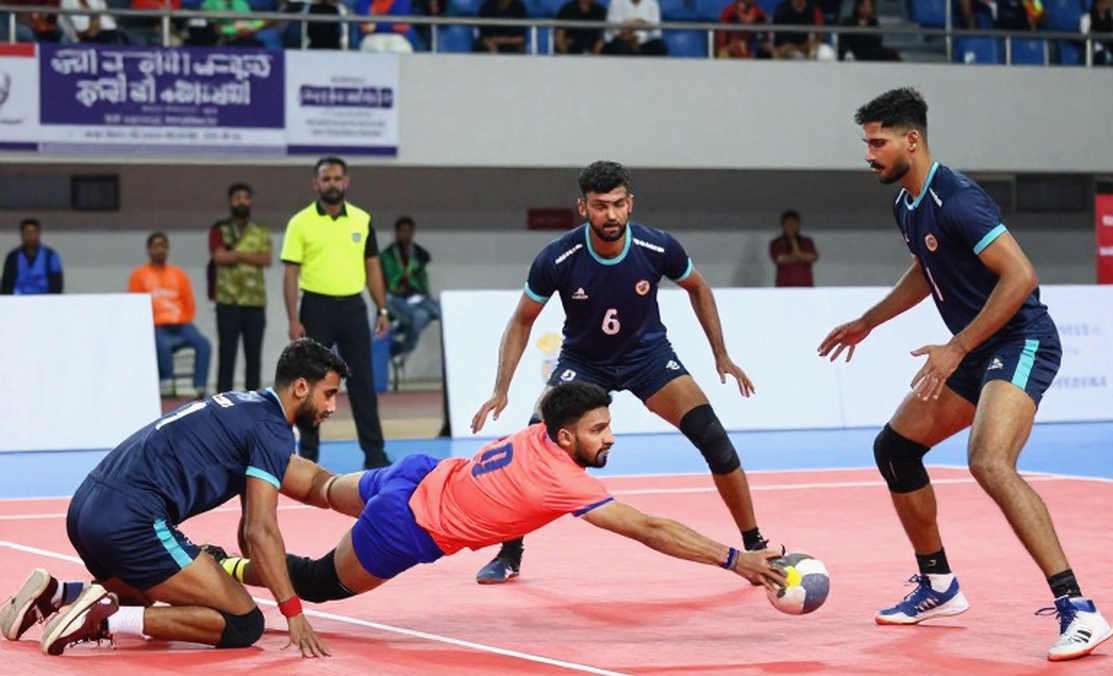
At the half-time whistle the scoreboard read 31-17. At the final whistle, 48-24. In the highlights reel that circulates afterwards, Nepal looks like rubble and India looks like an invincible machine. In my notebook this semifinal is filed somewhere else entirely — from that fourteen-point gap at the break, across which Nepal could not put India's defence under genuine pressure for a single full twenty-minute half.
The autopsy begins where the applause stopped. Thirteen years of watching kabaddi and four Asian Games cycles have taught me one habit: trust the scoreboard, but never only the scoreboard. Anyone calling India unbeatable on the strength of 48-24 did not watch the second half carefully. Had they, they would have asked how Nepal's touch points fell from 13 to 5 after the interval.
Context
This is a 2026 Asian Games women's kabaddi semifinal, Standard Style — a rectangular court, seven players a side, two twenty-minute halves. A raid is an attacker entering the opponent's half within a thirty-second limit, touching a defender and returning safely; a tackle is the defence stopping that raider inside its own half. An all out is the elimination of an entire seven-player unit — the opponent gains 2 bonus points and the eliminated side returns at full strength. The bonus line is a marked line deep in the opponent's half, worth 1 point to the raider, but only while the defence still has six or more players on court. A super tackle is a tackle completed with three or fewer defenders, worth 2 points instead of the usual 1.
The available figures show India with 35 raid points, 23 of them in the first half. India took 4 bonus points before the break. Across the match India forced three all outs, two of them in the first half. Nepal managed 13 touch points in the first half and only 5 in the second, plus 2 bonus points and one super tackle. The break read 31-17; the end read 48-24.
The all-out mechanism is the real engine
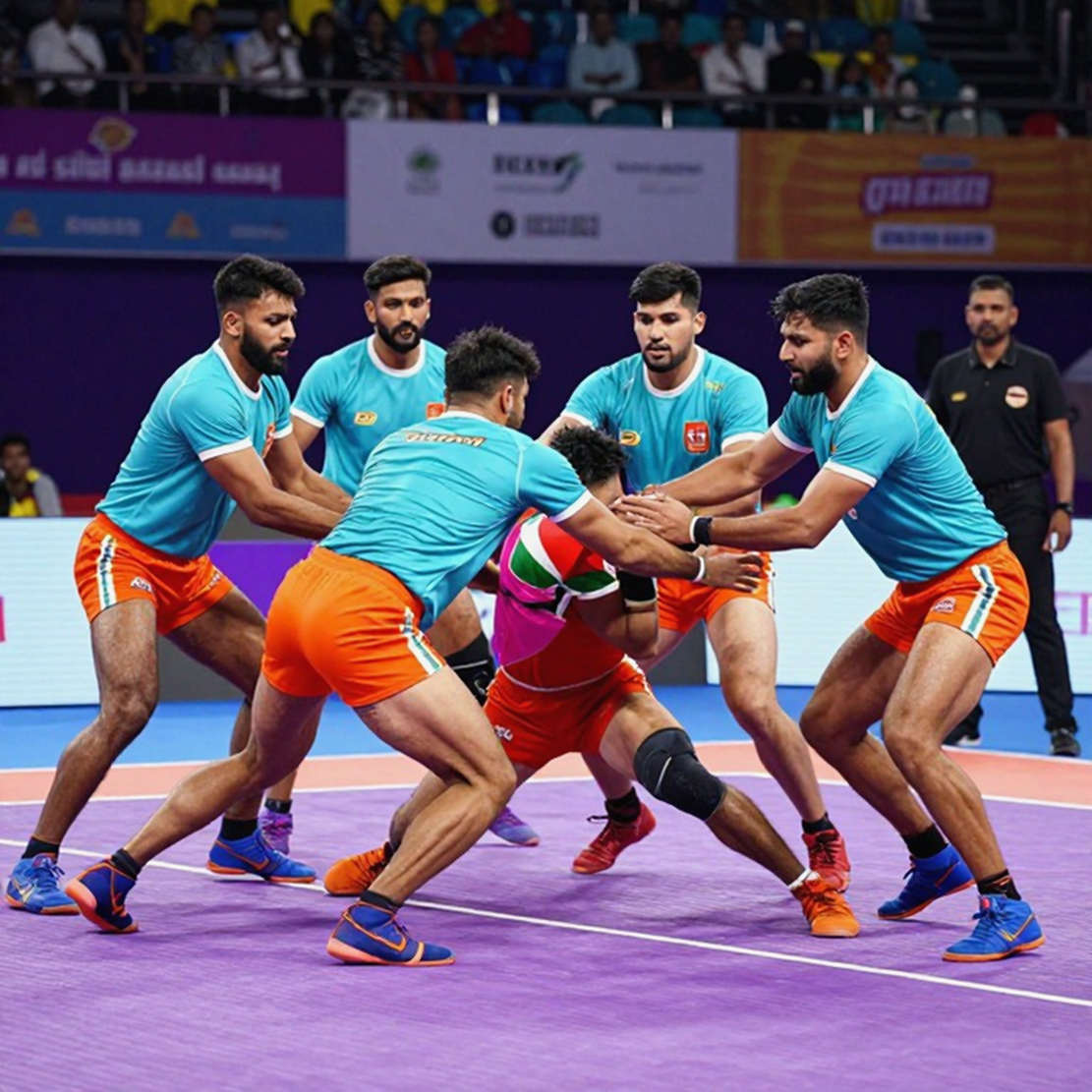
The biggest misreading of this scoreline is treating 48-24 as a vast skill gap. In reality the margin was manufactured by three all outs, and each all out is a double swing — India scores 2 points, and Nepal returns to the mat with a full seven. Every Nepal collapse was followed by a fresh opportunity, and every time India's raiding unit used that opportunity to break the defence again. In pure points arithmetic, 48-24 is never a twenty-four-point tactical superiority; it is a structural gap.
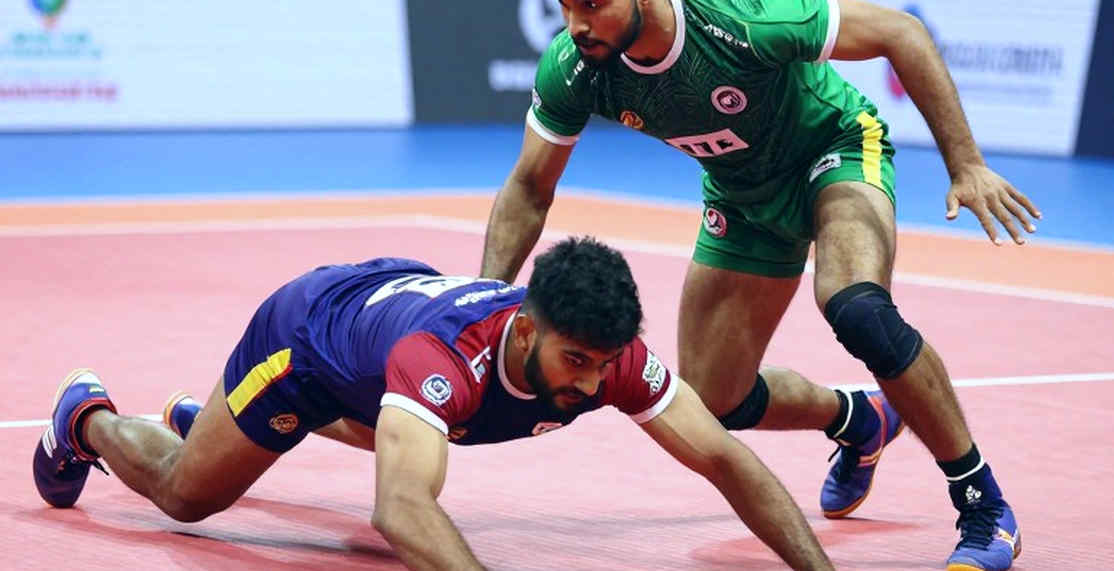
Bonus-line usage is the second piece of evidence. A bonus is not a safe touch; a bonus is a raid that penetrates deep into the defence to extract a point. A side that goes to the bonus in the first half is planning to drag the defenders backwards and weaken them — this is exactly where volume raiders separate from deep raiders. Nepal's defensive weakness, then, was not individual effort but chain-tackle discipline; even with a full seven defenders they conceded two all outs before the break.
The five touch points after the break invert the question
Nepal had 13 touch points in the first half, meaning that for twenty minutes they could answer in the raid, not only in defence. That number fell to 5 after the interval. This is not a fluctuation in form; it is a depth calculation. A fall from 13 to 5 signals a gap in physical capacity and bench depth; had this been tactical failure, the decline would not have been so evenly staged.
A caution is warranted here. The source report lists Nepal's points as 18 in one place, while the final score is 48-24 and the half-by-half breakdown (13 plus 5 touch points, plus 2 bonus, plus 1 super tackle) sums to roughly 22. The most reasonable reading is that the figure 18 refers to Nepal's touch points alone; the final total of 24 should be treated as authoritative. Likewise, India's 35 raid points are never reconciled against tackle points or all-out bonuses. Any judgement resting on the 35 alone is therefore fragile. Skip this data hygiene and the analysis does not stand.
The final is the only real test
Nepal reaching this semifinal is itself evidence of the depth problem in the women's field. India have long held a near-monopoly in women's kabaddi, Iran are the only consistent challenger, and Chinese Taipei reach the semifinals intermittently. Nepal are not a top-tier opponent. So this twenty-four-point win is not proof of India's form; it is a reaffirmation of their supremacy. The genuine data point arrives on September 26, 2026, in the final against the winner of Iran versus Chinese Taipei. If Iran advance, the match becomes a real contest; if Chinese Taipei advance, gold is close to certain.
The story nobody is writing
The commercial engine of Indian kabaddi is the men's Pro Kabaddi League — franchises, auctions, prime-time broadcast. There is no equivalent league for the women's game. So this win cannot convert into auction money, player salaries or the sponsorship market. Iran's and Nepal's women's sides survive largely on national-team competition and institutional backing. Nepal reaching a semifinal is a small signal of the sport spreading in South Asia, but the talent pipeline remains thin and careers remain short.
The contrarian angle: how I could be wrong
First, the available information contains no per-player breakdown. Sanju Devi is presented as the central raider, but her successful raid percentage appears nowhere — so whether India's 35 raid points were concentrated in one player cannot be verified. This is likely conventional media framing, which centres the attacker rather than the defence. Second, India may have rotated raiders after building a large first-half lead, a normal pattern in one-sided games — in which case second-half data cannot measure India's true depth. By the rules of my own stability index: before endorsing any tactical trend I require at least ten matches, two pressure situations and one injury return. This semifinal satisfies none of the three.
Takeaway
If the final is against Chinese Taipei, the gold is effectively already in India's hands; if Iran arrive, I will be watching raid efficiency and tackle chains rather than the scoreline. On September 26, 2026, my eyes will be fixed on one thing: whether India's defence can stand the first time it is placed under genuine pressure. This semifinal showed India's raiding. It did not show India's spine.